Field Experiences
Our courses leave the classroom constantly, from Sedona's red rocks and the Mogollon Rim to Death Valley, the canyons of the Yampa River, and the frozen lakes of Arctic Alaska.
At 7,000 feet on the Colorado Plateau, Flagstaff sits inside the best natural laboratory in North America, and our courses use it that way. Most weeks, some SES class is outside: measuring a stream, mapping a rock unit, coring a lake, or standing on a rim arguing about what the landscape is saying.
Close to home
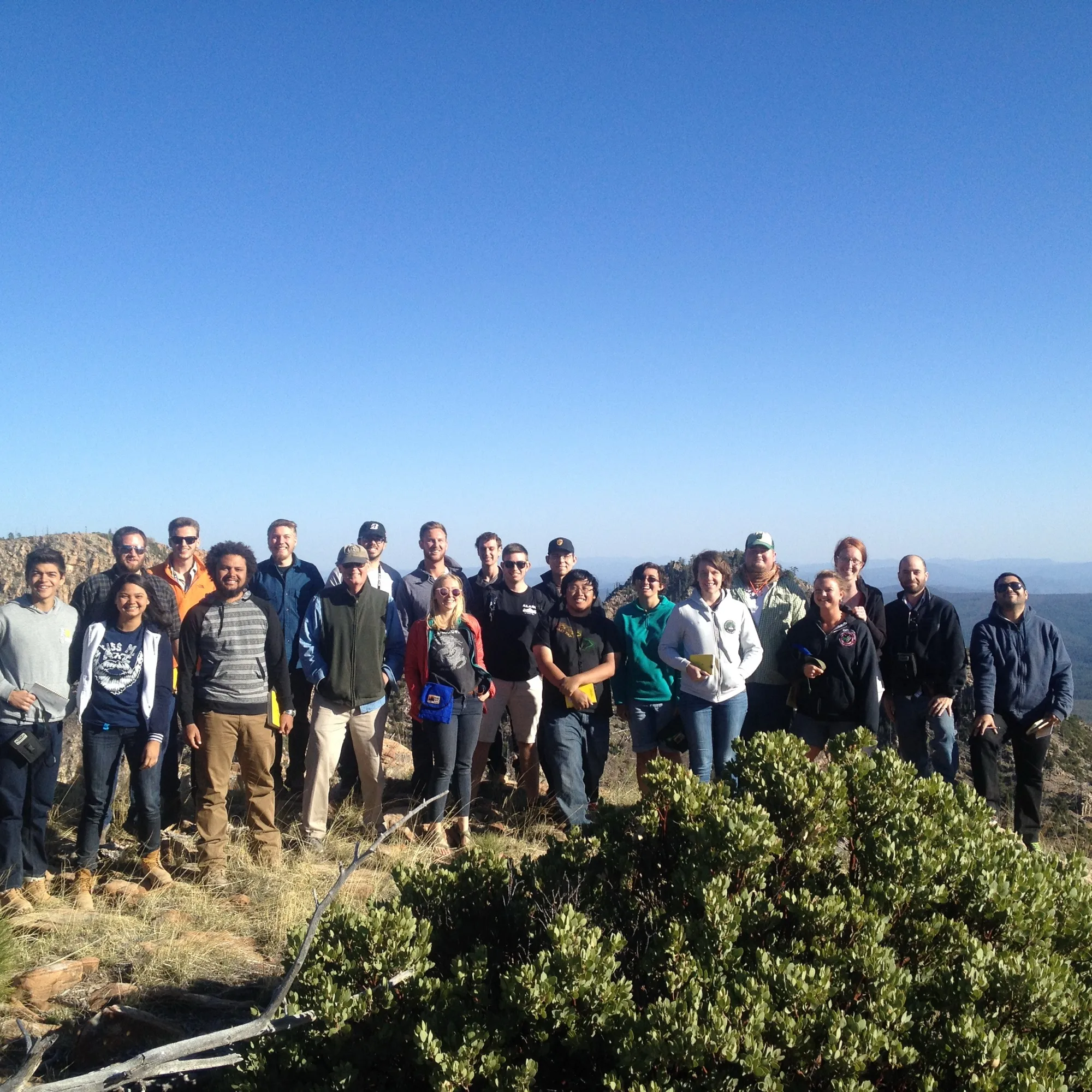 Sedimentary geology students working the edge of the Mogollon Rim, where the
Colorado Plateau breaks away toward central Arizona.
Sedimentary geology students working the edge of the Mogollon Rim, where the
Colorado Plateau breaks away toward central Arizona.
Within a day trip of campus: the Grand Canyon, Sedona’s red rocks, the San Francisco volcanic field, Meteor Crater, the painted badlands of the Little Colorado, and forest, desert, and alpine ecosystems stacked within an hour’s drive of each other. Introductory geology courses (GLG 324) read the stratigraphy at Sedona and swim the narrows of East Clear Creek; environmental science courses (ENV 324) wade local streams with nets and turbidity meters.
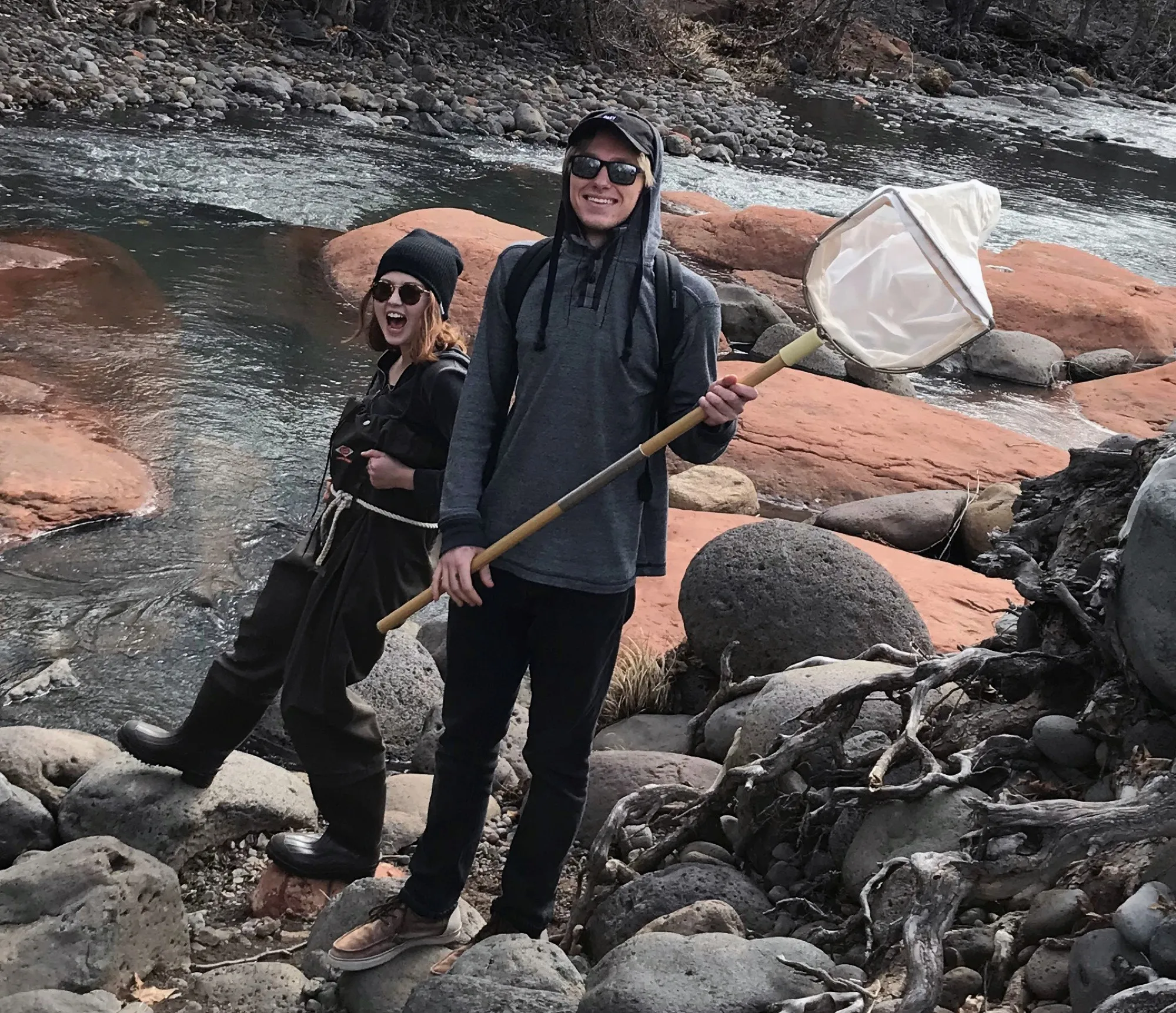 ENV 324 students sampling stream invertebrates.
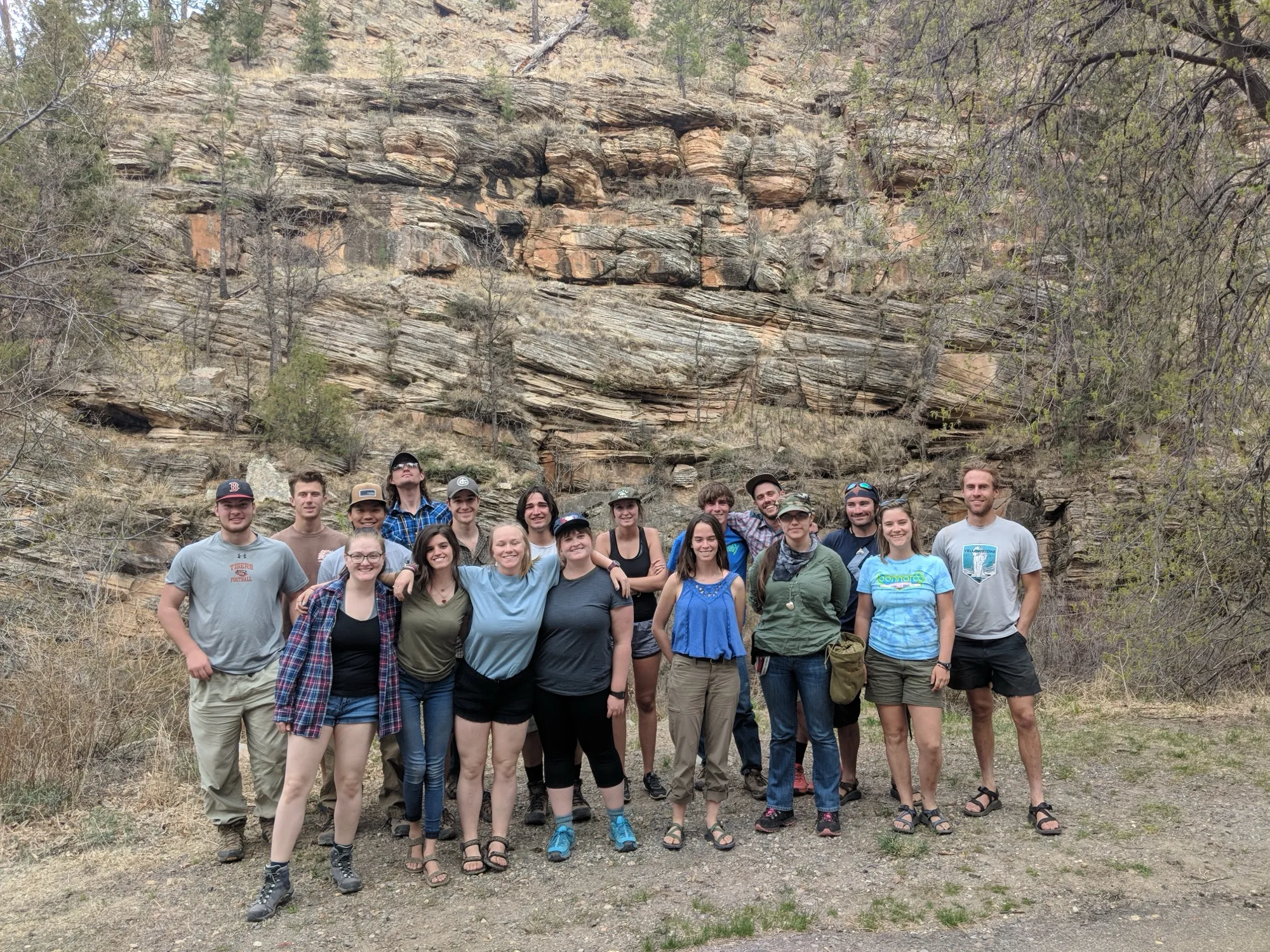 Reading canyon walls at East Clear Creek.
The region
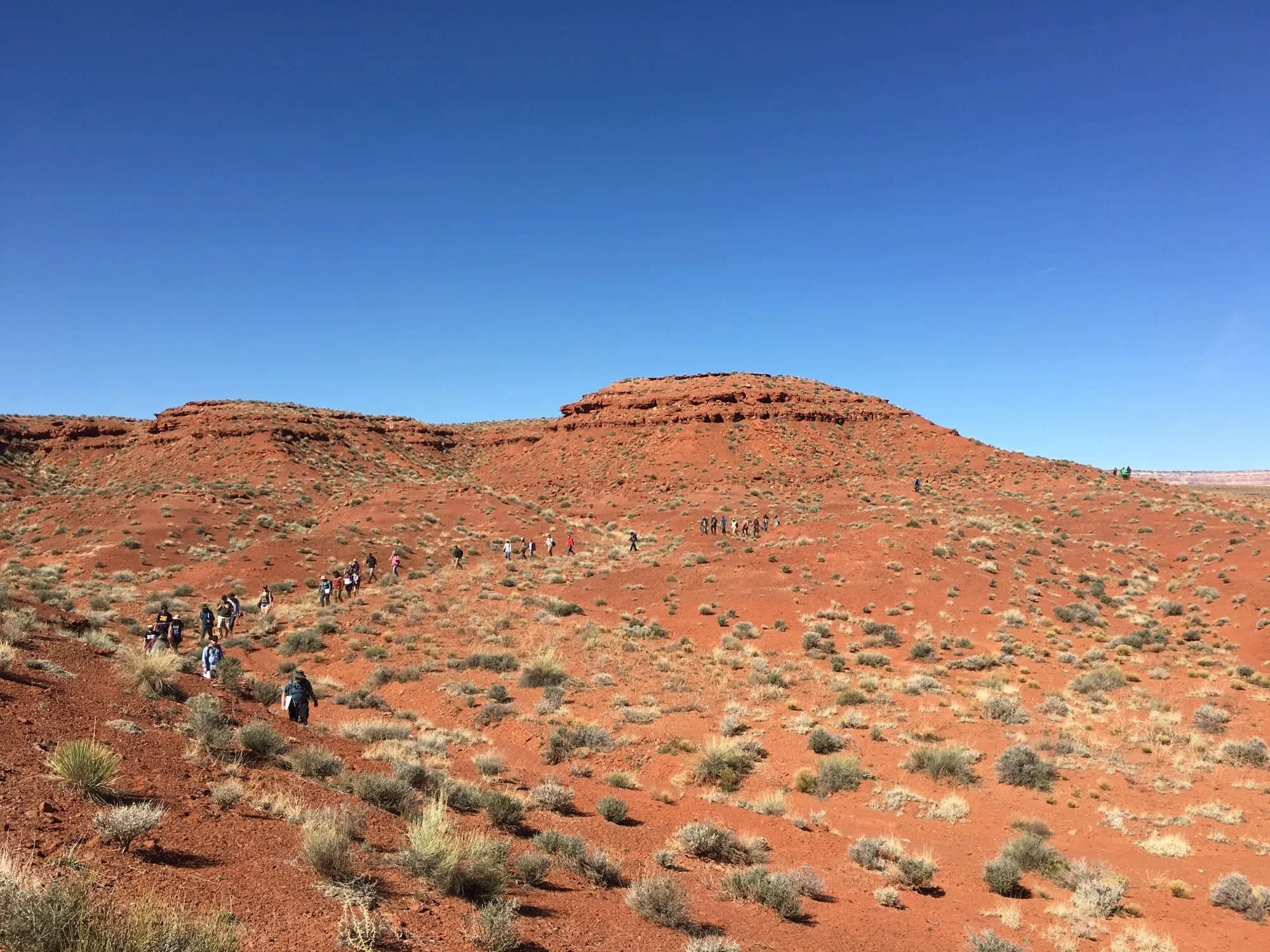 GLG 340 in the slickrock country of southern Utah.
Upper-division and graduate courses range farther: mapping in southern Utah (GLG 340), field geophysics and geomorphology across the Southwest, sedimentology on the San Juan River’s canyon walls (GLG 627), and desert processes at Death Valley (GLG 440C). Trips are working trips: students measure sections, run instruments, and defend interpretations on the outcrop.
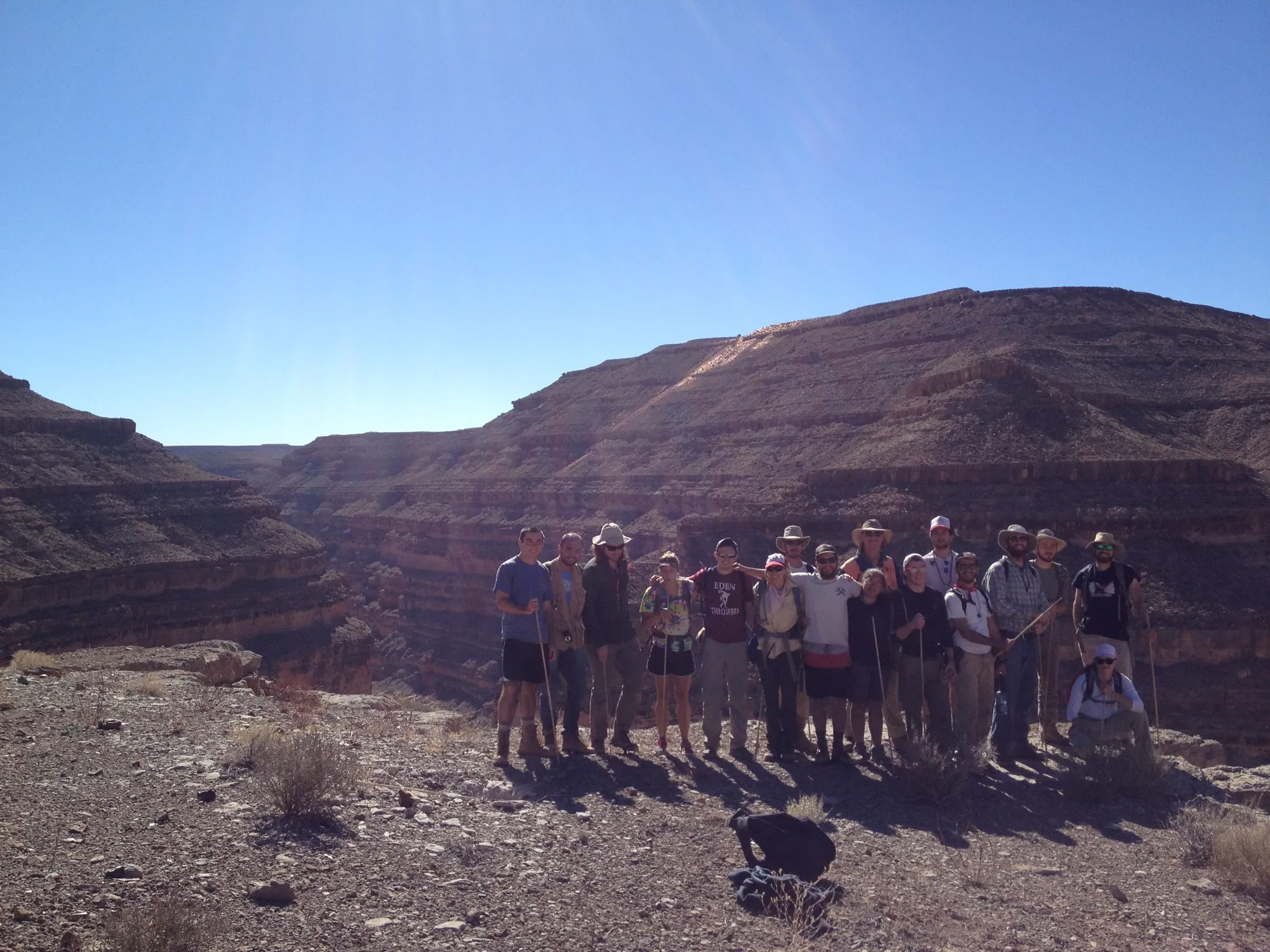 Measuring section above the San Juan River.
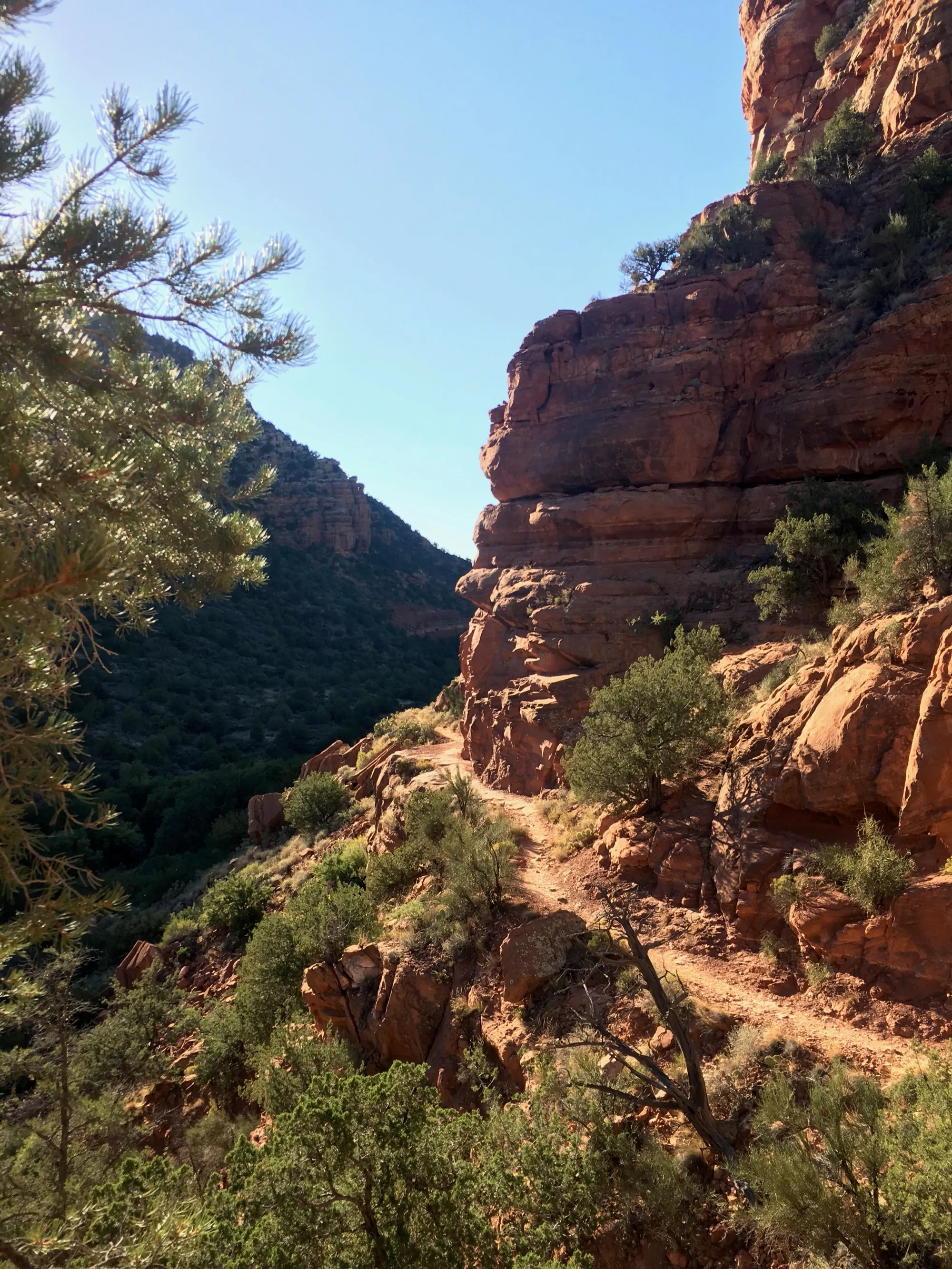 Canyon-country transit between field stops.
Expeditions
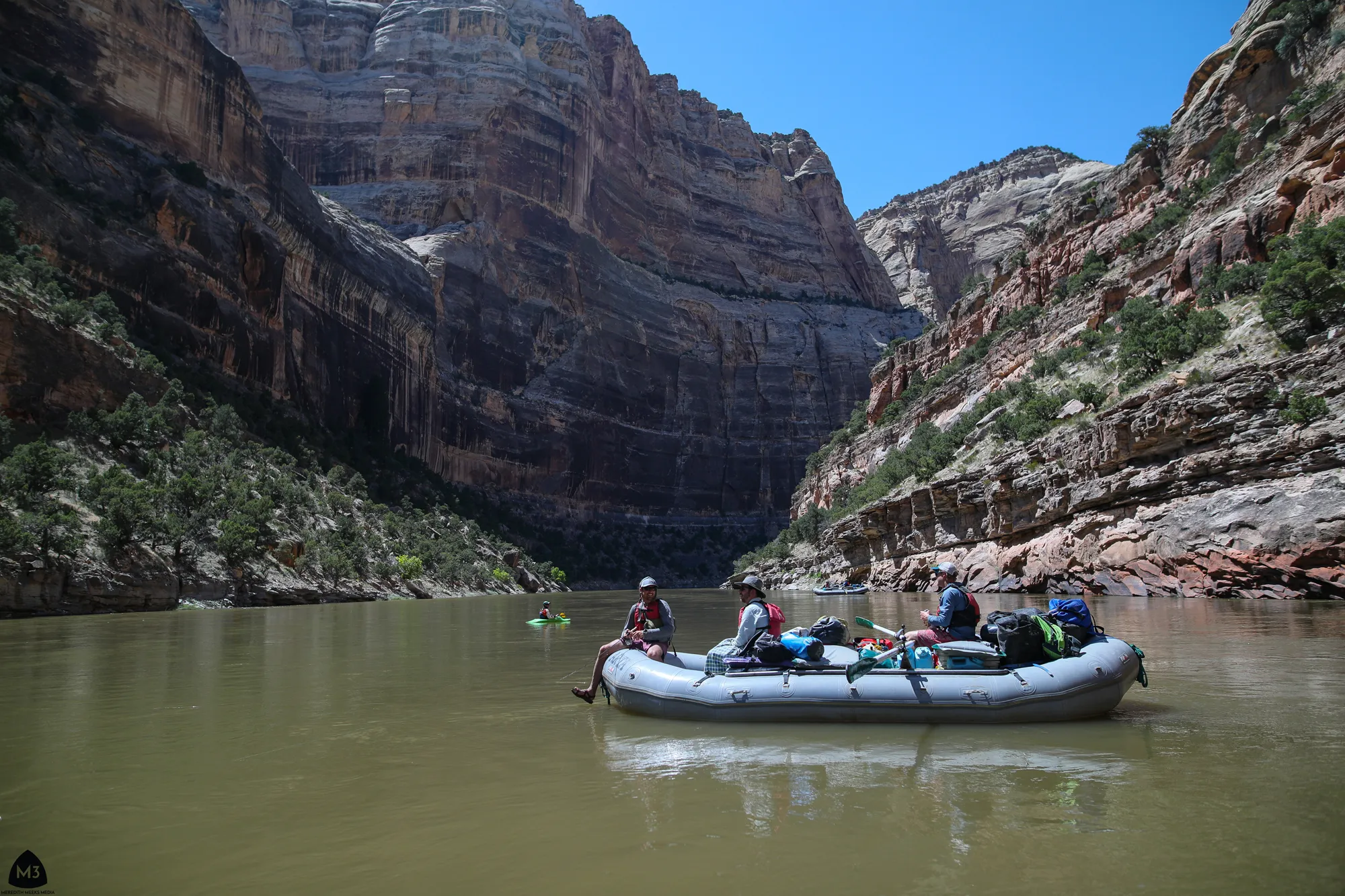 Running the Yampa River through the canyons of Dinosaur National Monument.
Some field experiences run longer than a day trip. Multi-day river expeditions carry students and faculty through the canyons of Dinosaur National Monument on the Yampa and Green rivers: reading a billion years of rock from the water by day, camping on river beaches at night.
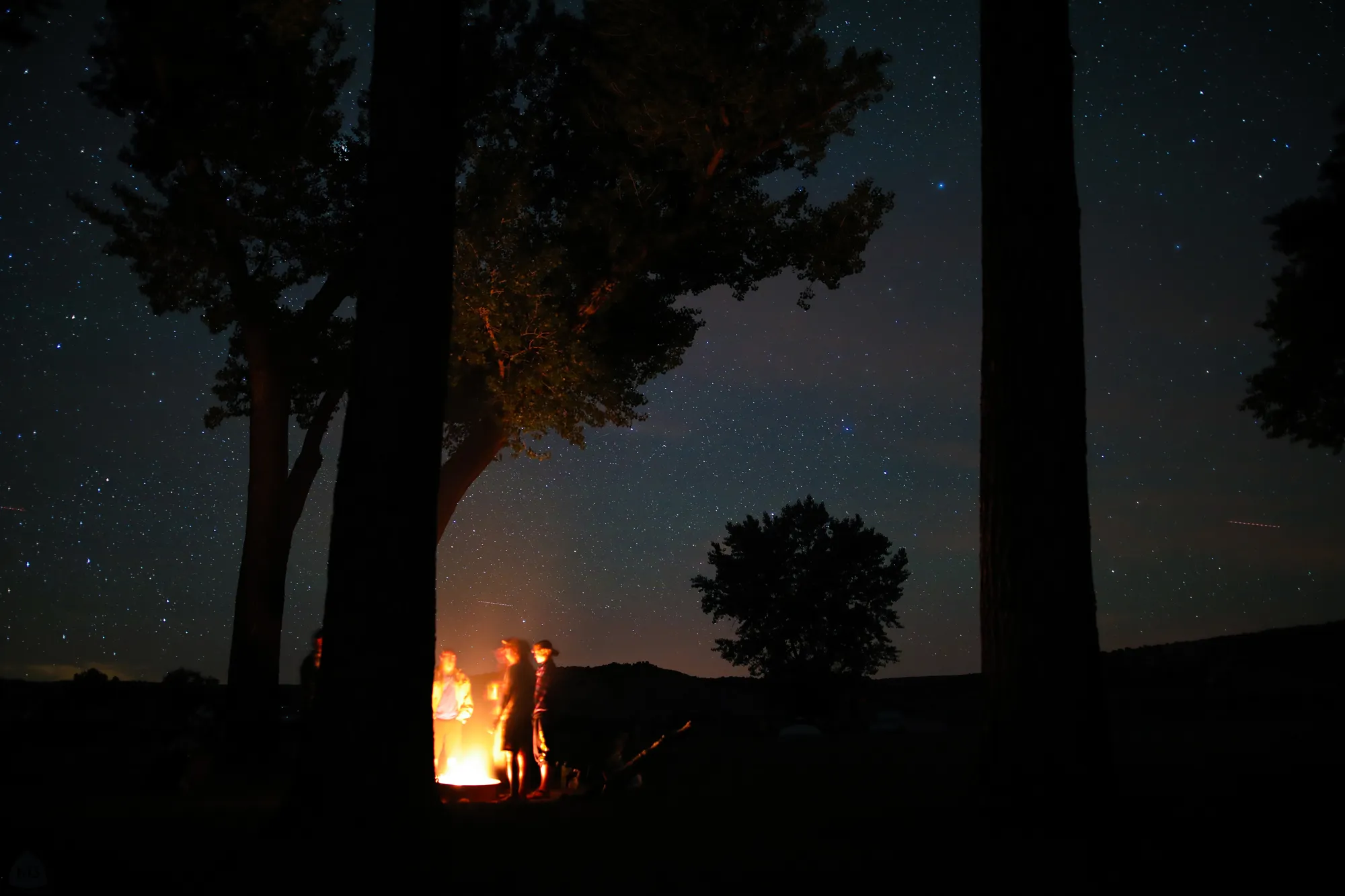 Camp under the dark skies of Dinosaur National Monument.
Fieldwork also extends into research. Undergraduate and graduate students join faculty expeditions well beyond the Southwest, like coring frozen lakes in Arctic Alaska to recover records of past climate.
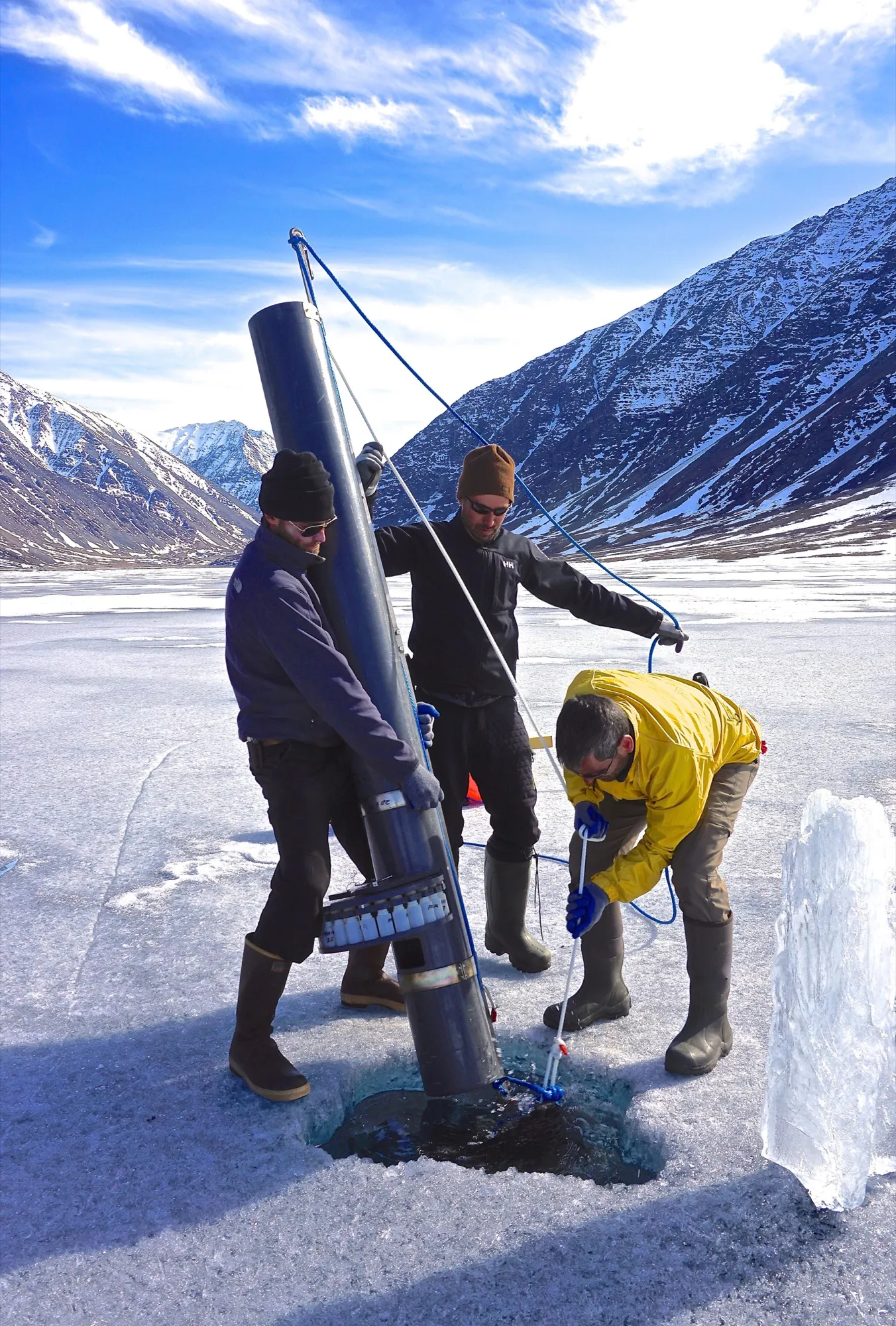 SES researchers deploying a sediment trap into a frozen lake in Arctic Alaska.
The point
Field courses aren’t a supplement here; they’re the curriculum. Employers and graduate programs consistently tell us that SES students arrive knowing how to work outdoors: how to plan a traverse, run equipment in wind and dust, keep a field notebook, and turn a landscape into data.
Interested? See the undergraduate degree programs and graduate degrees, or just come visit; the field trips are easier to explain outside.